
For decades, supply chains have largely followed a linear model: raw materials are extracted, products are manufactured, sold, used, and eventually discarded. While this model has supported large-scale economic growth, it has also created significant challenges, including resource depletion, rising waste, environmental pressure and increasing supply chain vulnerability.
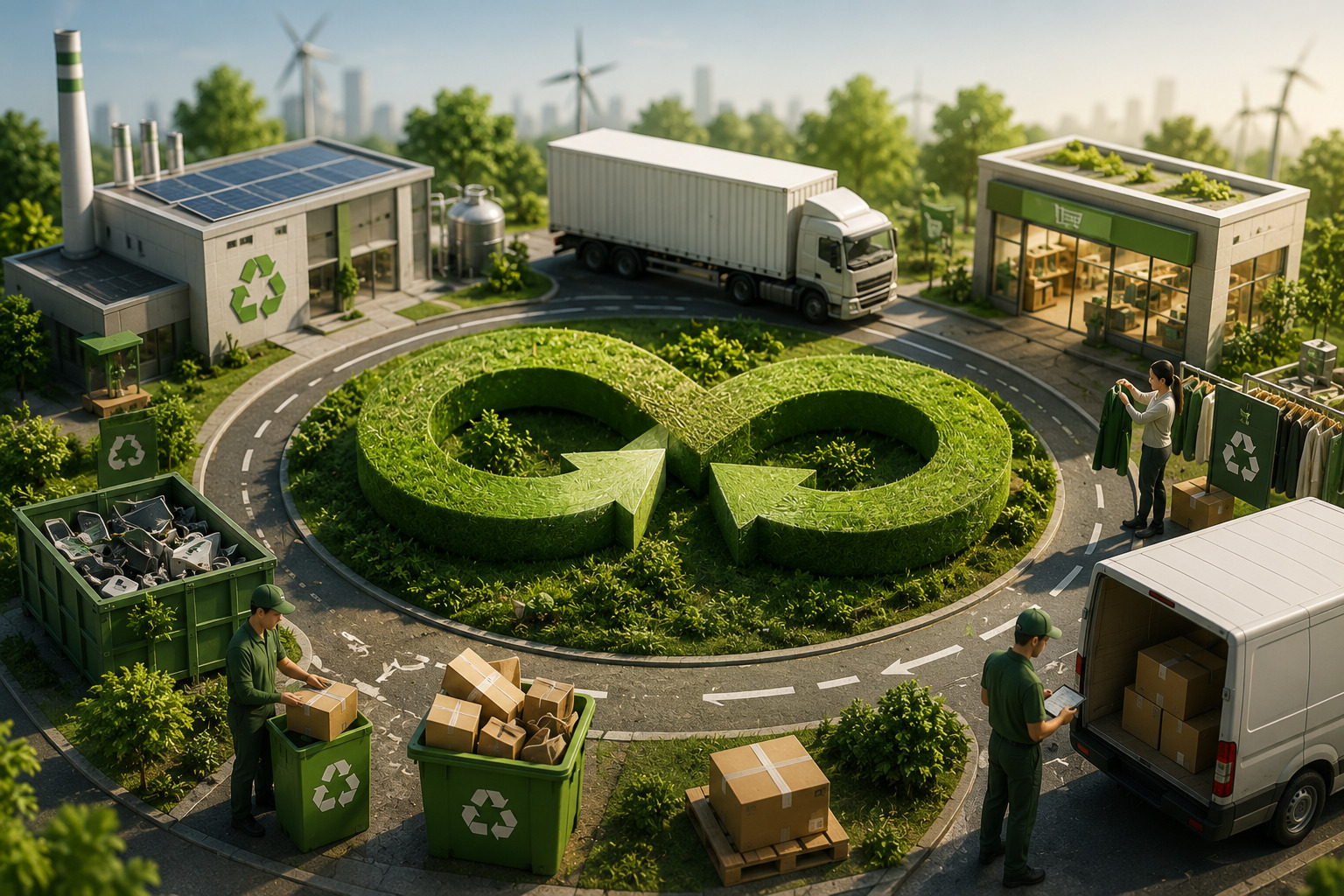
Today, businesses are increasingly moving towards a more regenerative approach: the Circular Supply Chain. Instead of treating products and materials as disposable after their first use, circular systems aim to keep them in circulation for as long as possible through reuse, repair, refurbishment, remanufacturing and recycling.
At the centre of this transition is Reverse Logistics in Supply Chain management. It enables products, components and materials to move back through the value chain, allowing businesses to recover value that would otherwise be lost. As the National Retail Federation explains, reverse logistics extends beyond returns and can include product recovery, inspection, refurbishment, recycling, donation and responsible disposal.
For students pursuing an MBA in supply chain management, understanding this transformation is increasingly important. The future of supply chain leadership will depend not only on managing the movement of products to customers but also on understanding what happens to those products after use.
A Circular Supply Chain is a supply chain designed to minimise waste and maximise the continued use of products, components and materials. Unlike the traditional linear model, it creates multiple pathways for resources to return to the production and consumption cycle.
For example, a product at the end of its first use may:
This model connects product design, procurement, manufacturing, distribution, consumption and end-of-life management into a more integrated system.
A successful circular supply chain does not begin when a customer returns a product. It begins much earlier, with decisions about product design, material selection, packaging, durability and ease of repair. Recent research also highlights the importance of supplier and packaging decisions in establishing the foundation for green value creation within circular supply chains.
In a traditional supply chain, logistics generally follows a forward direction:
Supplier → Manufacturer → Distributor → Retailer → Customer
Reverse logistics creates another flow:
Customer → Collection Point → Inspection → Repair/Refurbishment/Reuse/Recycling
This reverse flow is not always straightforward. Every returned product may require a different solution. One item may be suitable for immediate resale, another may require repair, while a third may need to be dismantled for its components.
This is why Reverse Logistics in Supply Chain management involves several activities, including:
The objective is to determine the highest-value use for every returned product or recovered material.
The shift towards Circular Supply Chain Management is not driven only by environmental concerns. It can also create measurable economic and strategic value.
Returned or used products do not necessarily represent complete financial losses. Through proper inspection and processing, businesses can recover value by reselling, refurbishing or repurposing products.
For instance, a returned electronic device may be tested, repaired and sold as a refurbished product. A damaged industrial component may be remanufactured instead of being discarded. This transforms reverse logistics from a cost-centre activity into a potential source of revenue.
Circular supply chains enable businesses to recover and reuse materials already present within the system. Reclaimed metals, plastics, textiles and electronic components can potentially reduce dependence on newly extracted raw materials.
This can also improve resilience during periods of raw material price volatility or supply disruption. Recovered materials may serve as alternative inputs when the availability or cost of virgin resources becomes uncertain.
Sustainable Supply Chain Management focuses on balancing economic performance with environmental and social responsibility. Circularity strengthens this approach by addressing what happens to products and materials throughout their complete lifecycle.
Instead of measuring sustainability only through lower emissions during production, businesses can also track:
This provides businesses with more tangible ways to measure and improve sustainability performance.
Returns and after-sales services are increasingly important parts of the customer experience. A smooth return, repair or replacement process can build trust, while inefficient reverse logistics can negatively affect customer satisfaction.
The NRF reports that free returns remain an important purchase consideration for many shoppers, while a poor returns experience can reduce the likelihood of repeat purchases. This demonstrates that reverse logistics can influence both operational performance and customer loyalty.
Get more insights from: A Complete Guide to the Supply Chain Management Framework and Its Benefits
Managing circular supply chains requires visibility. Businesses need to know where products are, what condition they are in and what the most valuable next step should be.
Technologies such as:
can help companies monitor products and materials throughout their lifecycle.
For example, data can help a business identify whether a returned product should be resold, repaired, refurbished or recycled. Better visibility also helps organisations forecast return volumes, reduce processing delays and coordinate activities across logistics providers, manufacturers, recyclers and secondary-market partners.
However, technology alone cannot create a circular supply chain. Businesses also need suitable processes, skilled professionals, reliable partners and clear performance metrics.
Despite its advantages, implementing circularity is complex. Return volumes can be unpredictable, and products may arrive in different conditions. Companies must also coordinate multiple partners involved in collection, transportation, repair, recycling and resale.
Other challenges include:
Therefore, circularity requires a strategic shift across the organisation. Product designers, procurement teams, manufacturers, logistics professionals and business leaders must work together rather than treating reverse logistics as an isolated operational function.
The modern supply chain manager must understand much more than transportation and inventory. Businesses increasingly need professionals who can manage complex networks, reduce waste, improve resource efficiency and develop resilient operating models.
This makes circularity an important area of learning for students pursuing an MBA in supply chain management. Through management education, students can develop knowledge of:
Students at an MBA college in Kolkata can particularly benefit from understanding how these concepts apply across industries such as manufacturing, retail, e-commerce, automotive, electronics and consumer goods.
The rise of circular supply chains is creating demand for professionals who can connect business performance with sustainability goals. As companies move from a “take-make-dispose” model towards systems based on recovery and reuse, supply chain expertise will play a central role in this transition.
The future of supply chains is likely to involve stronger integration between forward and reverse flows. Returns, repairs, recycling and material recovery will increasingly be considered during product design and supply chain planning rather than treated as afterthoughts.
Businesses that successfully adopt circular models can potentially achieve three outcomes at the same time:
Lower waste + recovered value + stronger supply chain resilience
The most successful organisations will not simply ask how quickly they can sell a product. They will also ask how long that product can remain useful, how its components can be recovered and how materials can be returned to productive use.
The rise of circular supply chains is changing the way businesses manage products, resources and value. By integrating reverse logistics into supply chain planning, organisations can extend product lifecycles, recover valuable materials, reduce waste and build greater resilience. As businesses increasingly move beyond the traditional linear model, circularity will become an important part of sustainable supply chain management and a key consideration for future supply chain professionals.
For students aspiring to build careers in this evolving field, the MBA in Supply Chain Management at BIBS offers an industry-integrated learning experience that combines classroom education with practical exposure, industry training and specialised supply chain knowledge. Affiliated with Vidyasagar University, a NAAC-accredited West Bengal State Government University recognised by the UGC, the programme prepares students for the changing demands of the logistics and supply chain sector. With its industry-focused curriculum and practical learning approach, BIBS continues to be a strong choice for students seeking an MBA college in Kolkata and aiming to develop the skills required to manage the supply chains of the future.
A Circular Supply Chain is a system designed to keep products, components and materials in use for as long as possible through repair, reuse, refurbishment, remanufacturing and recycling.
Reverse logistics moves returned, used or excess products and materials back through the supply chain for inspection, repair, resale, refurbishment, recycling or responsible disposal.
Traditional supply chains generally follow a linear “take-make-dispose” model, while circular supply chains aim to recover and reuse products, components and materials.
It helps reduce waste, recover materials, extend product lifecycles and reduce dependence on virgin resources, making supply chain operations more sustainable.
Circularity is transforming logistics, procurement, manufacturing and operations. Understanding these concepts can help MBA students prepare for emerging roles in sustainable business and supply chain management.

Posted on Jul 25, 2026
Categories Supply Chain Management
Copyright - BIBS Kolkata
| Website by Marko & Brando
All rights reserved